
How the Gatekeeper works, and how to get the most out of it
One small trainer checks your path, your putter face and your rhythm on every putt. Here's what it does, how to set it up, and three ways to practice with it.
$49.99 · 2 for $74.99 with free US shipping
Get the GatekeeperWhy short putts miss
Most short putts are lost before the ball gets anywhere near the hole. If the putter swings across your line, or the face twists open or shut, the ball starts off line. A good read can't save it.
The hard part is that you can't feel a small error. A stroke that feels straight often isn't, and practice without feedback just repeats the same miss.
The Gatekeeper gives you that feedback on every stroke. No filming yourself, no swing thoughts. You hear it.
“The biggest thing that I need to see for anyone using a teaching aid or a putting aid is to get direct feedback.”
Gary Barter, teaching professional, the Australian Golf Club
A ball, a gate and your stroke
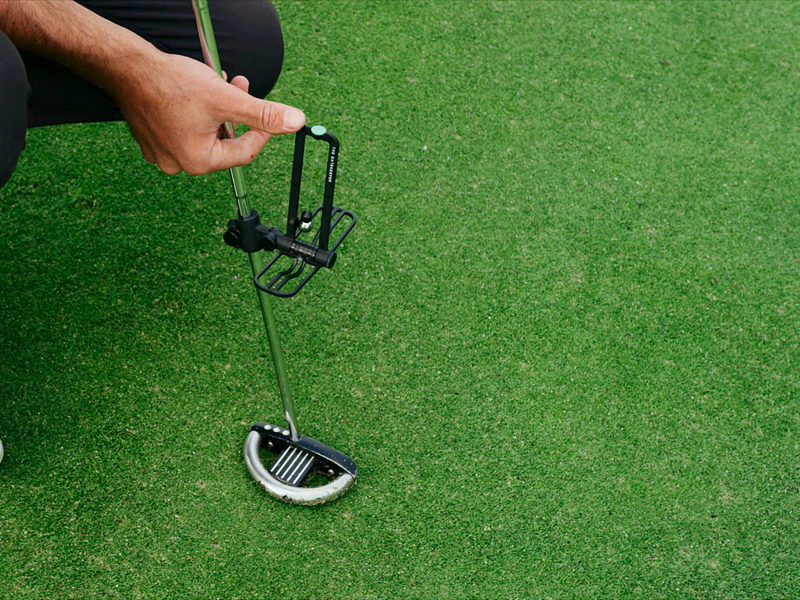
The Gatekeeper clips onto the lower part of your putter shaft. A small weighted ball hangs straight down and swings with your stroke.
Swing the putter on a path that matches, and the ball passes through the gate without touching. As long as your path matches, it goes through every time.
Loop the putter off line, rush the change of direction or twist the face, and the ball touches the side. You hear the click straight away, so you know that stroke was off.
What it trains
- Path: the putter swinging on your line
- Face: square through impact, not twisting
- Rhythm: a smooth change of direction
- Start line: the ball starting where you aimed
Ready in a couple of minutes
Watch it once, then follow the five steps. You only do this the first time: once it's locked off, it stays set.
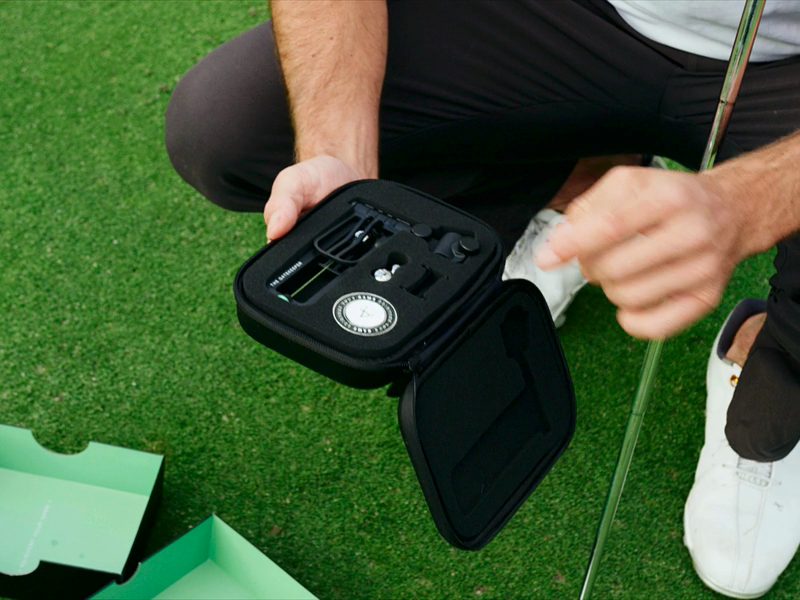 1
Open the case
Everything packs into its own zip case. There's a booklet on top. Give it a read first.
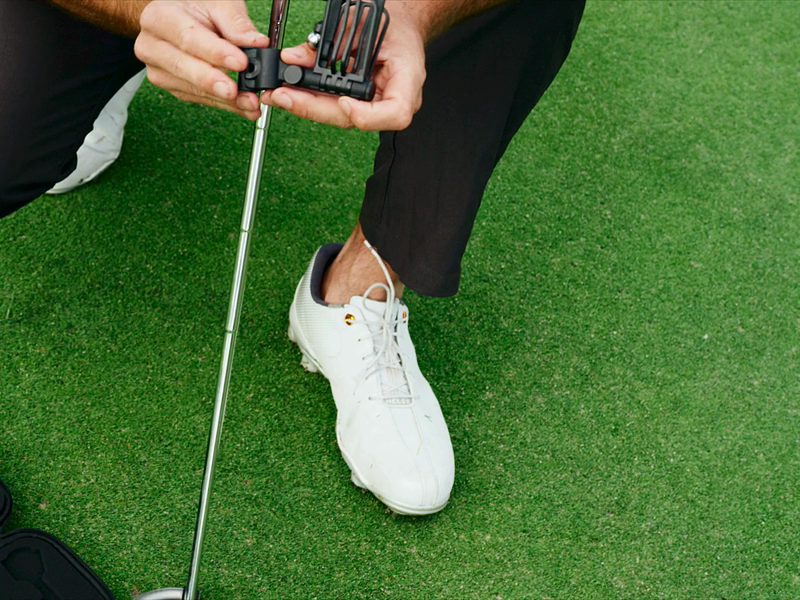 2
Fit it to your shaft
Slide it onto the lower part of your putter shaft. If it feels loose, slide the reducer in first so it sits firm. It suits shafts from 8 mm to 15 mm.
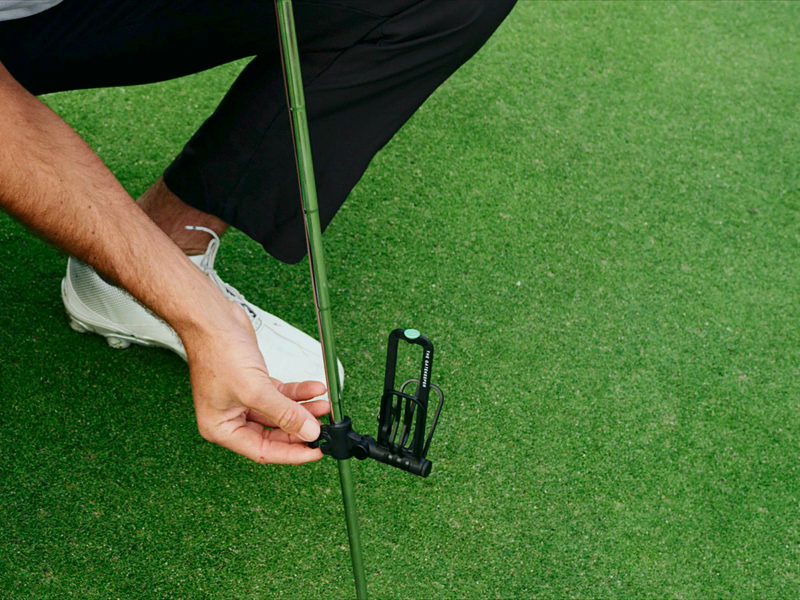 3
Square it and lock it
Line it up square with your putter face, then tighten the locking nut at the back.
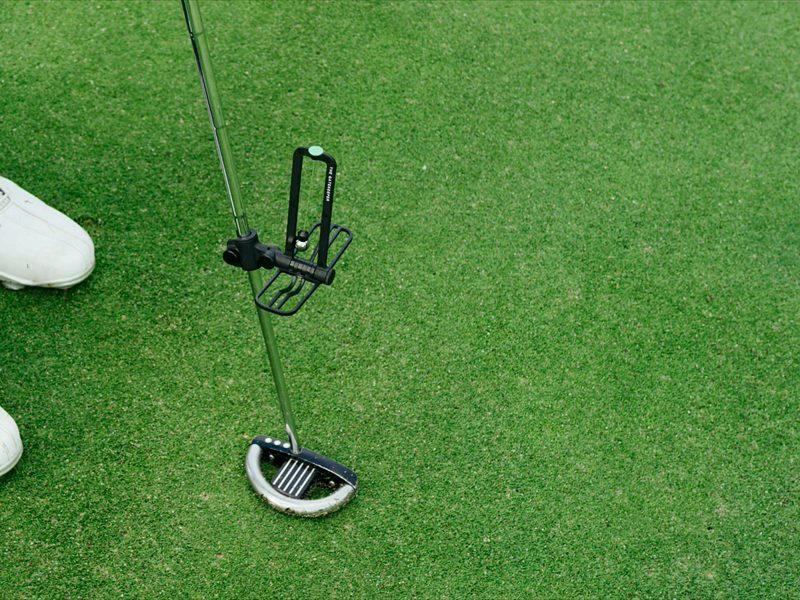 4
Open the wings
Undo the front nut, fold the wings out and check the ball hangs straight down.
 5
Match your lie angle
Take your normal setup. If the ball is touching one side, push the trainer out or in a little, set up again and use the ball rest until the ball sits dead centre. Lock it off and it stays set for next time.
Three ways to use it
Start with path. Add rhythm. Save the face test for when the first two feel easy.
Path
Make your normal stroke. If the ball goes through without touching the sides, your path matched. Loop the putter off line and it hits the side.
Rhythm
Loosen it slightly and lift the front gate. Go back smooth and through smooth and nothing moves. Snatch the putter at the change of direction and the ball knocks the wing down.
Face
Switch to a bigger ball. As the putter face twists, the gap gets narrower, so a twisting face gets caught too. Move on to this one once path and rhythm feel easy.
Make it fit your stroke
Set the height for your stroke
Low on the shaft, the ball swings more, because the putter head moves more than your hands. Slide it up the shaft and it swings less. There's no wrong spot: set it where the feedback is useful to you.
Working on a flatter or more upright putter? Rest the putter on the ground at the angle your coach wants, set the trainer so the ball hangs straight down, then find the setup that puts the ball dead centre.
Arc or straight stroke? Both work
It works whether your stroke arcs or goes straight back and through. As long as the putter's path matches, the ball passes cleanly.
Using a plane board? Swing along it with the Gatekeeper on, then take the board away. The Gatekeeper keeps checking your path, so you learn to do it on your own.
Is it for you?
- You push or pull short putts
- You practice on your own and want to know if a stroke was good
- You putt at home on carpet or a mat between rounds
- Your coach has given you a path, face or rhythm fix to work on
“I really feel that anyone using it will get positive feedback no matter what level of player they are.”
Gary Barter, teaching professional
The details
- Fits
- Putter shafts from 8 mm to 15 mm. Blade and mallet heads up to 4.5 inches wide.
- Left or right
- Works the same for left- and right-handed golfers.
- Where
- Carpet, a putting mat or the practice green.
- Power
- None. No batteries, no app.
- Carry
- The wings fold flat and it packs into its own zip case.
- Guarantee
- 30 days. Not for you? Send it back for a refund of the price.

Hear the bad putt before you see it
$49.99+ $8 US shipping on one. 2 for $74.99 · 3 for $99.98, free US shipping
- 30-day money-back guarantee. Return policy
- Ships from the US in 1–3 business days, tracked


